Rectal Prolapse
In rectal prolapse the swollen lining of the rectum forms a ring that folds down inside (partial) or comes out through the anus (complete). It is an advanced form of chronic hemorrhoid disease.
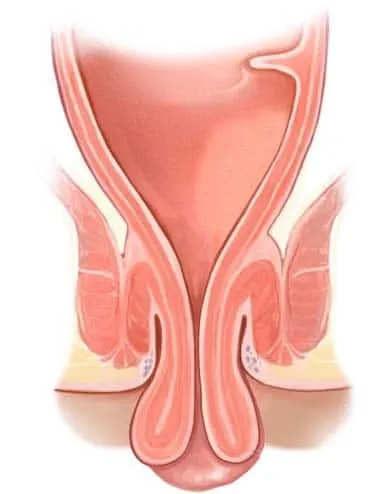
You may notice
- A feeling of weight or pressure
- Mucus discharge and moisture
- Bleeding, pain or a dull ache
- Never feeling fully emptied
What Dr. Cranford does
Because rectal prolapse grows from the same cushions as hemorrhoids, Dr. Cranford treats it with the same non-surgical Keesey technique.
This condition needs prompt treatment.
503.702.4200Common questions
How is rectal prolapse different from hemorrhoids?
Instead of separate swollen cushions, the whole swollen lining of the rectum forms a ring that folds down inside (partial) or comes out (complete).
What are the symptoms?
A feeling of weight or pressure, mucus discharge, moisture, bleeding, protrusion, pain or a dull ache, and never feeling fully emptied.
How does Dr. Cranford treat it?
As an advanced form of chronic hemorrhoid disease, with the same non-surgical Keesey technique.
Rectal prolapse: the full entryDr. Cranford’s complete clinical notes, in his own words. 232 words, about 1 min.Read the notes
A condition that needs immediate treatment
Rectal prolapse is a form of protrusion from the rectum other than hemorrhoids. Just as in hemorrhoids, the same “cushions” or “pads” consisting of discrete masses of thick submucosa which contain blood vessels, smooth muscle, elastic and connective tissue are the cause of the trouble. But instead of forming individual “pouches” as in hemorrhoids, the whole swollen lining of the rectum forms a thick ring which entirely surrounds the inside of the lower part of the rectum.
There are two types of rectal prolapse. The first type, partial prolapse, is a folding down of this thickened ring within the rectum. It obstructs the free passage of stool and symptoms are the same as with hemorrhoids but with particular emphasis on the feeling of “weight” or pressure. In the second type, complete prolapse, the swollen ring covered by the lining (mucus membrane) of the rectum protrudes on the outside through the anal orifice into puffy folds. It may or may not bleed at this time, but certainly causes pain and discomfort.
The symptoms of rectal prolapse may include mucus discharge, difficult and unrewarding evacuation, failure of satisfaction at stool, moisture, bleeding, protrusion, and pain and a dull ache, as well as the symptoms associated with hemorrhoids. Because rectal prolapse is an enlarged and advanced case of chronic hemorrhoids, Dr. Cranford treats this condition using the “Keesey Technique”.