Anal Stenosis
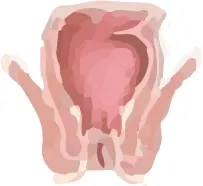
Anal stenosis means the anal opening has become too narrow. Stools get thinner and harder to pass, which over time leads to chronic constipation, hemorrhoids and painful fissures.
You may notice
- Narrow stools
- Difficulty or resistance moving the bowels
- Chronic constipation
What Dr. Cranford does
The usual fix, a sphincterotomy, cuts the muscle and can leave you with leakage. Dr. Cranford’s option is non-surgical: the narrowed sphincter is gently stretched back to its size under anesthesia, then treated topically so it stays open. Long-term results are excellent and it is fairly painless.
Common questions
What are the signs of anal stenosis?
Narrow stools and difficulty or resistance moving the bowels, which over time can lead to chronic constipation, hemorrhoids and fissures.
Is there an option besides cutting the muscle?
Yes. Instead of a sphincterotomy, Dr. Cranford gently dilates the narrowed sphincter under anesthesia and treats it topically so it stays open. It is fairly painless with excellent long-term results.
Anal stenosis: the full entryDr. Cranford’s complete clinical notes, in his own words. 188 words, about 1 min.Read the notes
A opening to small
This is a condition where the anal opening is too narrow and leads to difficulty passing a normal stool. The most typical first symptoms, not surprisingly, are narrowing of the stool and difficulty or resistance moving the bowels. Over time, this can lead to chronic constipation, hemorrhoids, and painful anal fissures.
Anal stenosis has traditionally been treated by simply cutting through one side of the sphincter to relieve the tension. Called a sphincterotomy, it simply defeats the action of a sphincter muscle (which is to close), and has the side effect of fecal incontinence or leaking of fecal matter.
Dr. Cranford has an alternative option for patients with this condition that is non-surgical and very effective. The narrowed sphincter is manually dilated, under anesthesia, to open it back up to original size. It is then treated topically so the muscle gets used to staying open. Then any fissures, for example, can be removed and the area can heal from the inside out. Hemorrhoids can then be treated more easily and quickly. This treatment has excellent long-term results and is fairly painless to the patient.