Anal / Genital Warts (Condyloma Acuminatum)
Anal and genital warts (condyloma acuminatum) are caused by HPV. They are surprisingly common, and because they itch, irritate, bleed and protrude, many patients who come in thinking they have hemorrhoids actually have warts.
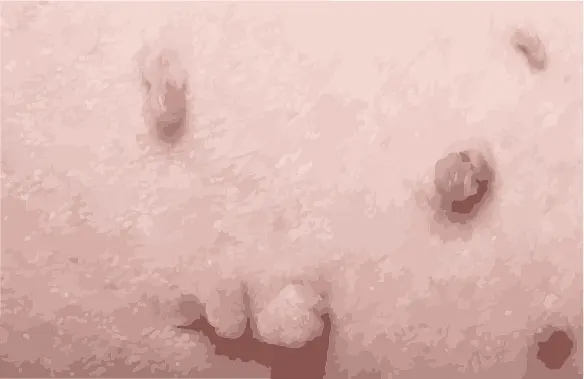
You may notice
- Itching and irritation
- Bleeding
- Bumps or protrusion around the anus
What Dr. Cranford does
Dr. Cranford treats warts regularly, first with topical medicine. More serious cases are removed under local anesthetic by excision or heat. It is a minor in-office procedure: you walk out when it is done, no hospital, and the sites usually heal without much scarring.
Common questions
Could my “hemorrhoids” actually be warts?
Often. Many patients who come in thinking they have hemorrhoids actually have warts, because the itching, irritation, bleeding and protrusion are so similar.
How are anal warts treated?
First with topical medicine. More serious cases are removed under local anesthetic by excision or heat (fulguration), as a minor in-office procedure with no hospital stay.
What causes anal and genital warts?
HPV, the most common sexually transmitted infection in the United States, spread by skin-to-skin contact.
Anal / genital warts: the full entryDr. Cranford’s complete clinical notes, in his own words. 187 words, about 1 min.Read the notes
How we treat the disease
Anal / genital warts are caused by the Human papillomavirus (HPV) which is the most common sexually transmitted infection in the United States and is spread by skin to skin contact. Condyloma acuminatum refers to an epidermal manifestation attributed to HPV. It is not usually a serious condition unless it goes untreated.
Anal / genital warts are surprisingly common and it is an affliction Dr. Cranford treats quite regularly. In fact, many patients who come in thinking they have hemorrhoids actually have warts. This is because many of the symptoms (itching, irritation, bleeding, anal protrusion) are very similar to hemorrhoids. It is best to have this condition treated immediately after one develops symptoms
Dr. Cranford treats this condition non-surgically with appropriate topical medications. In more serious cases he may have to remove them, under local anesthesia, either with a surgical blade (excision) or heat (fulguration). The sites usually heal without much scarring. This is a minor, in-office surgery and patients are able to get up and walk out when it’s completed. Like the rest of his procedures, it does not require hospitalization.