Anal Abscess
An anal abscess is a pocket of pus near the anal opening. It starts as a tender swelling, then turns hot, red and throbbing; chills and fever can follow. It can come from an infected fissure or a blocked anal gland.
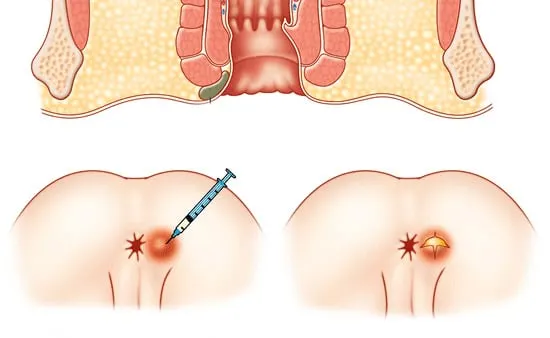
You may notice
- Tender swelling near the anus
- Heat and redness
- A dull ache that becomes throbbing pain
- Chills or fever

What Dr. Cranford does
Prompt incision and drainage is the usual treatment and works best done early, before the abscess breaks. Superficial abscesses are drained right in the office under local anesthetic, followed by pain relief and, for some people, antibiotics. Dr. Cranford has drained many abscesses in the office over his career.
Left untreated, an abscess keeps spreading and almost always leaves an anal fistula behind. Call the same-day line.
503.702.4200Common questions
Is an anal abscess an emergency?
It needs prompt care. Drainage works best when done early, before the abscess erupts; left untreated it keeps expanding and almost always leaves an anal fistula.
Can an abscess be drained in the office?
Superficial abscesses can be drained in the office using a local anesthetic. Large or deep abscesses may need a hospital and an anesthesiologist.
What causes an anal abscess?
Many things, including an infected anal fissure or blocked anal glands.
Anal abscess: the full entryDr. Cranford’s complete clinical notes, in his own words. 199 words, about 1 min.Read the notes
Our approach to this painful condition
An anal abscess is a painful condition in which a collection of pus develops near the anus. It usually begins with a tender swelling somewhere near the anal opening. As it progresses, there is heat, redness, and a dull steady ache that later becomes a throbbing pain. Chills and fever may also be experienced.
There are many different things that can cause an anal abscess including infection of an anal fissure and blocked anal glands. Surgical incision and drainage is the most common treatment and is usually successful if done promptly before the abscess erupts. If left untreated, an anal fistula will almost certainly form, connecting the rectum to the skin. This requires more intensive surgery. Furthermore, any untreated abscess may (and most likely will) continue to expand, eventually becoming a serious systemic infection.
Superficial anal abscesses can be drained in a doctor’s office using a local anesthetic. Large or deeper anal abscesses may require hospitalization and the assistance of an anesthesiologist. After the procedure, most people are prescribed medications for pain relief. Antibiotics may be required for some people. Dr Cranford has successfully lanced/drained many abscesses in office procedure in his career.